2026 Best Floor Stand Displays for Global Buyers?

Time:2026-10-19 Author:Mason
0%

In 2026, physical retail still has a difficult job: attract attention quickly, explain value clearly, and support confident purchase decisions. Online shopping is convenient, but a store can create a stronger sensory moment. A customer can touch packaging, compare sizes, and notice a product without searching for it. That moment gives Floor Stand Displays practical importance across supermarkets, pharmacies, electronics stores, and trade environments.

Industry data supports this continued role. Euromonitor International’s 2024 Voice of the Consumer: Retail Survey shows that shoppers still value physical stores for product discovery and immediate access. Deloitte’s 2025 Global Powers of Retailing also describes stores as connected experiences, rather than simple transaction points. Meanwhile, the Adobe Digital Economy Index reported global online spending above one trillion dollars in 2024, increasing pressure on physical displays to offer something digital channels cannot. Tangible experience matters.

But a display is not automatically effective. Poorly balanced shelves, weak messaging, or unstable construction can waste valuable floor space. We have seen attractive units fail because staff could not refill them quickly. That detail is easy to overlook. Global buyers should examine load capacity, flat-pack efficiency, material durability, language flexibility, and local safety expectations. Shop! Association guidance on shopper marketing also emphasizes visibility, accessibility, and measurable in-store engagement. These factors deserve more attention than decorative styling alone.

This guide reviews the 2026 best Floor Stand Displays for global buyers. It compares formats, materials, portability, branding options, and operational value. Some recommendations remain subjective. Market conditions change. A practical buyer should test a sample before committing to large-volume production.
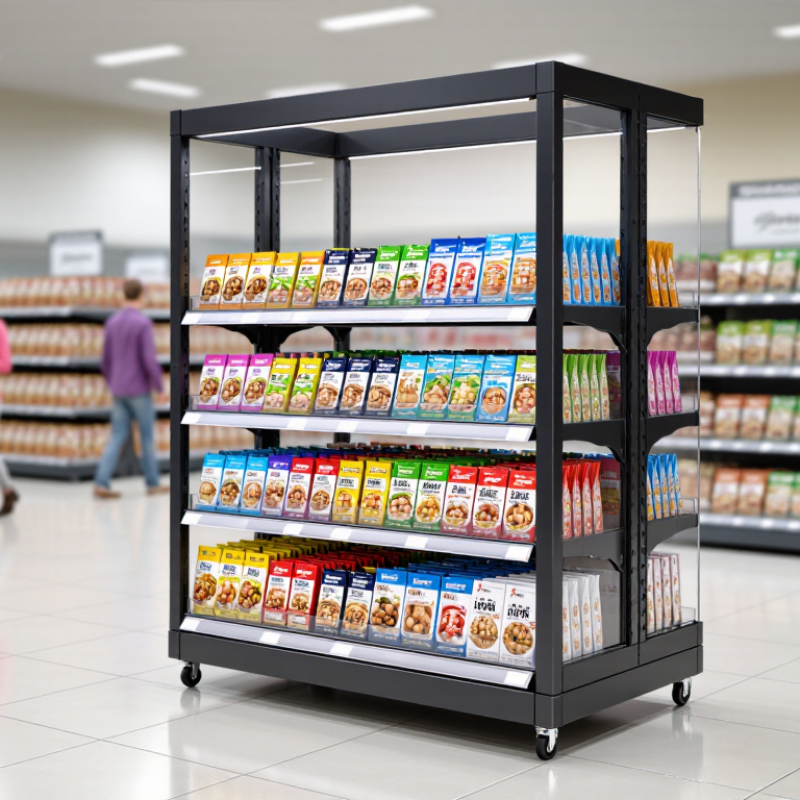
2026 Best Floor Stand Displays for Global Buyers?

What Are Floor Stand Displays and How Are They Used?

Floor stand displays are freestanding structures placed on floors, not counters or walls. They hold products, printed messages, sample units, or digital screens. In retail stores, they guide shoppers toward a product zone. At exhibitions, they create a visible information point without permanent construction. Their height and position help messages remain noticeable above crowded shelves.

A practical evaluation should examine stability, load capacity, footprint, and assembly time. A display near a checkout may need a narrow base and rounded edges. A supermarket unit may require stronger shelves for packaged goods. Materials also matter. Powder-coated metal suits repeated use, while reinforced board can reduce shipping weight. Clear graphics, readable type, and replaceable panels support regular campaign changes. Accessibility should not be forgotten. Important information must remain visible to people with different heights and mobility needs.

The best design is not always the largest. Space matters. A tall unit can block sightlines or interfere with emergency routes. Global buyers should check carton dimensions, installation instructions, electrical requirements, and local safety rules before ordering. A display can look impressive in a catalog yet feel unstable on an uneven floor. That detail is easy to miss. More shelves may also create clutter instead of improving sales. Testing a sample in the real environment can reveal weak joints, glare, poor reach, or confusing instructions before larger production.

Which Floor Stand Display Types Suit Different Global Retail Needs?

Global retail environments need floor stand displays that match shopper movement, product weight, and store density. Single-sided stands work well against walls in supermarkets, pharmacies, and compact convenience stores. They preserve walking space and keep product information facing one direction. Double-sided units suit open aisles, department stores, and temporary campaign zones. They attract shoppers from both sides, but they need a stable base.

Rotating displays help customers browse small products from several angles. They fit gift areas, travel retail, and specialty shops with limited floor space. However, rotating hardware can wear faster in busy locations. Lockable floor stands provide better control for higher-value electronics or demonstration items. They also reduce accidental product movement. Safety remains essential. Buyers should check load capacity, rounded edges, base stability, and local accessibility requirements before ordering.

In field testing, modular stands often perform best across different markets. Adjustable shelves can accommodate changing package sizes and seasonal stock. Tool-free assembly also helps overseas teams reduce installation delays. Still, modular designs may look less rigid when heavily loaded. That trade-off is easy to miss. I have seen attractive displays fail because their bases were too narrow for crowded aisles. Material selection matters as well. Powder-coated metal supports frequent use, while recycled board may suit short campaigns and lighter products. Confirm packaging dimensions, replacement parts, language panels, and cleaning needs with the supplier. Small details influence long-term retail performance.

How to Compare Materials, Sizes, Stability, and Display Capacity

2026 Best Floor Stand Displays for Global Buyers?

Material choice affects cost, strength, and disposal. Corrugated cardboard is light and economical, but humidity can soften its edges. Steel offers excellent stability and repeated use, while recycled plastic resists moisture but may increase transport weight. Grand View Research estimates the global retail display market will continue growing through 2030, driven by flexible in-store merchandising. Buyers should request material specifications, load ratings, and recyclability evidence rather than relying on appearance.

Size must match both the product and the shopping path. A narrow 40-centimeter base may suit small stores, but it can feel unstable with tall packaging. The International Ergonomics Association recommends considering reach and visibility when products are positioned for shoppers. Compare shelf depth, header height, and total footprint. Display capacity is not only a number. Ten tightly packed units can sell worse than six units with clear labels and easy hand access. That trade-off is often missed.

Tips: Test a loaded sample on a hard floor and a carpeted floor. Push it lightly from two sides. Check whether the base shifts, shelves bend, or the header blocks sightlines. Use a simple capacity test: count sellable units after removing damaged packaging. ASTM stability and load-testing methods can guide supplier checks, but local conditions still matter. Some supplier capacity figures remain optimistic. Ask for photos, test records, and packed dimensions before ordering.

2026 Best Floor Stand Displays for Global Buyers

Comparison of common display materials and formats by recommended load, display tiers, and stability rating.

Powder-coated steel offers the highest load capacity and stability for heavy products. Aluminum is lighter and easier to transport, while MDF provides broad shelving space at a moderate cost. Acrylic is best suited to lightweight promotional products. Values represent typical commercial fixture specifications; final performance depends on base depth, anchoring, shelf design, and product distribution.

What Safety, Accessibility, and Sustainability Standards Should Buyers Check?

For global buyers, a floor stand display should pass more than a visual inspection. Check its declared load capacity, center of gravity, locking parts, and resistance to tipping. Ask for test reports under relevant local standards, such as EN 17206 for temporary structures or equivalent regional requirements. Do not accept “heavy-duty” as proof. A sample should stand on an uneven showroom floor without wobbling.

Accessibility needs practical checking. Measure the display beside a wheelchair, not only on a drawing. Keep approach routes clear, protect sharp corners, and place frequently used information within comfortable reach. Text should remain readable from standing and seated positions. High-gloss panels can create glare under retail lighting. That detail is often missed. Confirm that interactive elements provide accessible alternatives when possible.

Sustainability claims require evidence. Request material specifications, recycled-content records, responsible timber documentation, and packaging data. Look for repairable joints, replaceable graphics, and finishes with lower chemical emissions. An environmental product declaration can be useful, but it does not replace a full lifecycle review. Check whether parts can be separated for recycling in the destination market. I have seen attractive displays become waste after one campaign because adhesives prevented reuse. That is a design failure, not merely a disposal problem. Also verify transport dimensions, since oversized packaging can quietly erase environmental gains.

How to Select Suppliers, Control Costs, and Plan Global Shipping?

For global buyers, selecting a floor stand display supplier requires more than comparing unit prices. Request production samples, material specifications, load tests, and carton drawings. A reliable supplier should explain steel thickness, board density, surface treatment, and assembly tolerances clearly. Factory audits and quality records add confidence, although documents alone cannot replace physical inspection.

Control the landed cost, not only the purchase price. Include tooling, packaging, inland transport, duties, insurance, and destination handling. The World Bank’s Logistics Performance Index 2023 shows major differences in customs efficiency and shipment reliability between markets. These differences can change the real cost significantly. Our early quotation was too optimistic because we ignored oversized cartons. That mistake remains worth remembering.

Shipping plans should match the display’s volume and launch deadline. UNCTAD’s Review of Maritime Transport 2024 reports that maritime transport carries over 80% of global merchandise trade by volume. Sea freight usually suits large display orders, while air freight may protect urgent launches. Ask suppliers for palletized dimensions and container-loading plans before signing. The International Maritime Organization also emphasizes accurate cargo information and safe packing practices. Moisture barriers, corner protection, and drop testing are practical details, not optional decoration. Leave time for port delays, inspections, and rework. Global planning is never perfectly clean.

2026 Best Floor Stand Displays for Global Buyers? – How to Select Suppliers, Control Costs, and Plan Global Shipping

Indicative planning comparison for international buyers. Prices are benchmark ranges in USD and should be confirmed through supplier quotations, approved drawings, packaging tests, and current freight rates.

Display Type Typical Use Recommended Materials Typical Finished Size
(W × D × H)
Estimated Unit Cost
at 100–500 Units
Typical MOQ Production Lead Time
After Artwork Approval
Estimated Packed Volume
per Unit
Estimated Packed Weight
per Unit
Supplier Selection Priorities Cost-Control Opportunities Global Shipping Planning Best-Fit Buyer
Retail Display Corrugated Cardboard Floor Stand Printed corrugated board, kraft or coated paper, optional metal base 400–600 × 300–450 × 1,400–1,800 mm US$8–25 100–300 units 15–30 days 0.025–0.060 m³ 2–6 kg Color consistency, board strength, moisture resistance, drop-test packaging, accurate die-cutting Use one-piece flat-pack construction, reduce print coverage, standardize shelf sizes, and avoid unnecessary laminated parts Usually suitable for consolidated sea freight or parcel shipment; protect corners against compression and humidity
Retail Display MDF or Plywood Floor Stand Moisture-resistant MDF or plywood, printed graphics, edge banding, metal hardware 450–700 × 350–500 × 1,500–1,900 mm US$35–95 50–150 units 25–45 days 0.080–0.180 m³ 12–30 kg Panel flatness, formaldehyde compliance, surface finish, assembly strength, packaging design Use flat-pack panels, common hardware, fewer surface finishes, and replaceable graphic panels Volume and dimensional weight can raise freight cost; request export cartons with corner protection and moisture barriers
Retail Display Metal Wire Floor Rack Powder-coated steel wire, sheet-metal shelves, hooks, adjustable feet 500–700 × 350–500 × 1,500–2,000 mm US$25–80 50–200 units 30–50 days 0.060–0.160 m³ 8–22 kg Weld quality, coating adhesion, corrosion resistance, load capacity, dimensional repeatability Use standardized wire diameters, reduce welded components, nest parts during packing, and use one powder-coat color Check stackability and nesting ratio before quotation; sea freight is generally more economical for larger orders
Retail Display Acrylic Floor Display Clear or colored acrylic sheet, aluminum or steel base, printed inserts 350–600 × 300–450 × 1,200–1,800 mm US$30–110 50–150 units 25–45 days 0.070–0.180 m³ 6–18 kg Material thickness, scratch protection, UV stability, polished edges, protective film, assembly quality Use standard sheet thickness, minimize curved parts, design replaceable inserts, and avoid oversized transparent panels Packaging must prevent scratching and cracking; allow extra carton volume for foam, separators, and protective film
Retail Display Aluminum Modular Floor Stand Extruded aluminum profiles, composite panels, steel connectors, printed fabric or PVC graphics 500–800 × 350–600 × 1,800–2,200 mm US$70–220 20–100 units 30–55 days 0.080–0.220 m³ 8–25 kg Profile tolerance, connector durability, tool-free assembly, replacement-part availability, graphic interchangeability Use a common frame system, share profiles across models, ship graphics separately, and design reusable cases Good for repeated international use; confirm spare-part packing and whether the design can ship in a reusable transport case
Retail Display Plastic Injection-Molded Floor Stand PP, ABS, or HIPS plastic, steel reinforcement, printed or applied graphics 450–700 × 350–550 × 1,400–1,900 mm US$35–140 300–1,000 units 45–75 days for new tooling 0.070–0.200 m³ 8–25 kg Tooling ownership, resin specification, mold maintenance, color matching, impact strength, recycling information Use existing tooling where possible, simplify undercuts, consolidate colors, and confirm annual volume before investing in molds Rigid molded parts may create high cubic volume; compare nesting, knock-down, and semi-assembled packing options
Digital Display Floor-Standing Digital Kiosk Powder-coated steel or aluminum enclosure, commercial display, media player, tempered glass 500–750 × 400–650 × 1,500–2,000 mm US$450–1,500 10–50 units 35–60 days 0.180–0.450 m³ 25–70 kg Electrical safety, thermal management, screen warranty, operating temperature, software compatibility, spare parts Use standardized screen sizes, separate the media player, avoid custom electronics, and define warranty responsibilities in writing Battery restrictions, customs classification, and shock protection must be checked before dispatch; use palletized freight for multi-unit orders
Event Display Fabric Tension Floor Stand Aluminum tube frame, silicone-edge fabric graphic, carry bag or wheeled case 600–1,200 × 300–500 × 1,800–2,400 mm US$90–280 10–50 units 20–40 days 0.040–0.120 m³ 6–18 kg Frame alignment, fabric color profile, zipper quality, graphic fit, replacement fabric availability Reuse the frame, change only graphics, standardize tube diameters, and select a soft case for lower initial cost Generally efficient for air or consolidated freight because the frame disassembles; confirm bag dimensions and airline handling limits
Service Fixture Wood-and-Metal Demonstration Stand MDF or plywood cabinet, powder-coated steel frame, acrylic or glass shelves 600–900 × 450–700 × 1,500–2,000 mm US$120–450 10–50 units 35–60 days 0.180–0.500 m³ 30–90 kg Load testing, cabinet alignment, door hardware, electrical routing, finish durability, installation instructions Use modular panels, standard hinges, replaceable shelves, and a common cabinet footprint across countries May require palletization and liftgate delivery; confirm destination-site access, delivery appointment, and installation scope
Sustainability Recyclable Paperboard Floor Stand Recycled corrugated board, water-based inks, paper labels, minimal adhesive 350–600 × 250–450 × 1,200–1,800 mm US$7–22 100–300 units 15–30 days 0.020–0.055 m³ 1.5–5 kg Recycled-content documentation, print rub resistance, moisture performance, recyclability, structural testing Reduce mixed materials, use a single board grade, limit coatings, and optimize the flat-pack layout Low weight supports consolidated freight; protect against humidity and request packaging that is also recyclable where practical
Supplier Control Sample and Pre-Production Approval Approved prototype, color proof, material swatches, assembly sample, packaging sample Not applicable US$100–800 per development cycle 1–3 samples 7–21 days per sample cycle Depends on prototype Depends on prototype Require signed specifications, approved color references, tolerance limits, carton marks, and defect criteria before mass production Correct design and packaging issues before mass production; a low sample cost is less important than avoiding rework Request a packed sample and measured carton dimensions before final freight booking
Shipping Planning Flat-Pack and Knock-Down Configuration Panels, frames, shelves, connectors, protective packaging, assembly guide Usually 30–70% smaller than fully assembled packing May add US$3–20 per unit for hardware and packing design Project dependent May add 5–15 days for validation Often reduced by 30–70% Usually unchanged or slightly higher with protective packaging Check assembly time, missing-part risk, tool requirements, carton strength, and destination labor capability Optimize cubic volume rather than only unit price; compare total landed cost, including assembly and damage claims Best for sea freight, consolidated shipments, and destinations with high dimensional freight charges
Planning assumptions: Cost ranges cover typical display production only and generally exclude artwork development, tooling, taxes, duties, certification, installation, inspection, and freight. Lead times begin after final artwork, materials, specifications, and deposit approval. Packed volume is calculated from the outer shipping carton rather than the assembled display. For supplier comparison, request the same specification, Incoterm, carton dimensions, gross weight, quantity, destination, warranty terms, and inspection standard from every qualified supplier. Final landed cost should include product price, tooling, packaging, inland transport, export documentation, international freight, insurance, customs duty, import tax, destination handling, and local delivery.

FAQS

What safety checks should buyers require for a floor stand display?

Check the declared load capacity, center of gravity, locking parts, and tipping resistance. Ask for test reports under relevant local standards. “Heavy-duty” is not proof. Test a sample on an uneven floor. It should remain stable without wobbling.

How can buyers test accessibility in a realistic way?

Place the display beside a wheelchair during inspection. Keep approach routes clear and protect sharp corners. Frequently used information should sit within comfortable reach. Measure it physically. Drawings can mislead.

How should display text and interactive features support different users?

Text should remain readable from standing and seated positions. Avoid glare from high-gloss panels under strong retail lighting. Interactive elements should offer accessible alternatives where practical. Lighting changes everything.

What sustainability evidence should suppliers provide?

Request material specifications, recycled-content records, responsible timber documents, and packaging data. Also check finishes with lower chemical emissions. An environmental declaration helps, but it does not replace a lifecycle review.

How can buyers design displays for reuse?

Look for repairable joints, replaceable graphics, and separable materials. Check whether local recycling systems can process each component. Adhesives may prevent reuse after one campaign. That is a design failure worth questioning.

Which costs belong in the real purchasing budget?

Calculate tooling, packaging, inland transport, duties, insurance, and destination handling. Do not compare unit prices alone. Oversized cartons can quietly increase the final cost. Our early estimate missed this.

How can buyers evaluate a supplier beyond paperwork?

Request production samples, material specifications, load tests, and carton drawings. Ask about steel thickness, board density, surface treatment, and assembly tolerances. Factory audits help, but documents cannot replace physical inspection.

How should buyers plan shipping for a global display order?

Match the shipping method to volume and launch timing. Sea freight often suits large orders, while air freight supports urgent launches. Request palletized dimensions and container-loading plans before signing. Include moisture barriers, corner protection, and drop testing. Leave time for delays and rework.

Conclusion

This guide to 2026 Best Floor Stand Displays for Global Buyers explains how Floor Stand Displays support product presentation, information sharing, and organized merchandising in retail, exhibitions, offices, and public spaces. It compares common formats, including single-sided, double-sided, rotating, modular, and multi-tier designs, helping buyers match each type with different store layouts, product categories, traffic levels, and promotional goals.

The guide also outlines how to evaluate materials, dimensions, weight capacity, stability, portability, and usable display area before purchase. Buyers will learn what to check regarding safe edges, anti-tipping features, accessibility, labeling, packaging, and environmentally responsible materials. Finally, it covers supplier assessment, sample approval, quality control, cost planning, minimum order considerations, lead times, customs preparation, protective packaging, and international shipping coordination, enabling global buyers to select practical displays while managing budgets and delivery risks effectively.

Mason

Mason

Mason is a seasoned marketing professional with a deep expertise in the company's offerings and a passion for driving brand awareness. With a strong background in digital marketing strategies, he has an innate ability to connect with diverse audiences and effectively communicate product benefits.......